
Psychological safety is no longer a “nice to have.” It is increasingly recognised as a critical psychosocial risk factor – one that directly impacts wellbeing, performance, and organisational sustainability.
Many organisations invest in workshops, leadership messages, or awareness campaigns to improve psychological safety. These efforts generate insight and intention. Yet under pressure, behaviours revert, patterns re-emerge, and the dial barely moves (if it in fact is being measured).
The reason psychological safety stalls is simple: psychological safety cannot be sustained through awareness alone. It must be designed into the system of work.
Psychological safety is shaped by how work gets done
Research in organisational psychology consistently shows that psychological safety is influenced less by what leaders say and more by how decisions are made, how challenge is handled, and whose thinking is valued under pressure.
In practice, risk often emerges when:
- Certain ways of thinking dominate decision-making
- Some voices consistently adapt while others are amplified
- Speed, certainty, or action are rewarded at the expense of reflection, risk awareness, or people impact
Over time, these patterns create invisible exclusion. People self-censor, disengage, or expend emotional energy managing how they show up, all of which increases psychosocial risk.
To shift psychological safety meaningfully, organisations need both clarity about where risk exists and a practical way to change how work operates day to day.
Combining insight: where to focus and how to act
This is where the integration of Steople’s Psychological Safety Assessment™ and HBDI® (Herrmann Brain Dominance Instrument®) creates real leverage.
Steople’s Psychological Safety Assessment provides a clear picture of:
- Where psychological safety is strong
- Where risk is emerging
- Which teams, roles, or systems require attention
It answers the critical question:
“Where do we need to focus?”
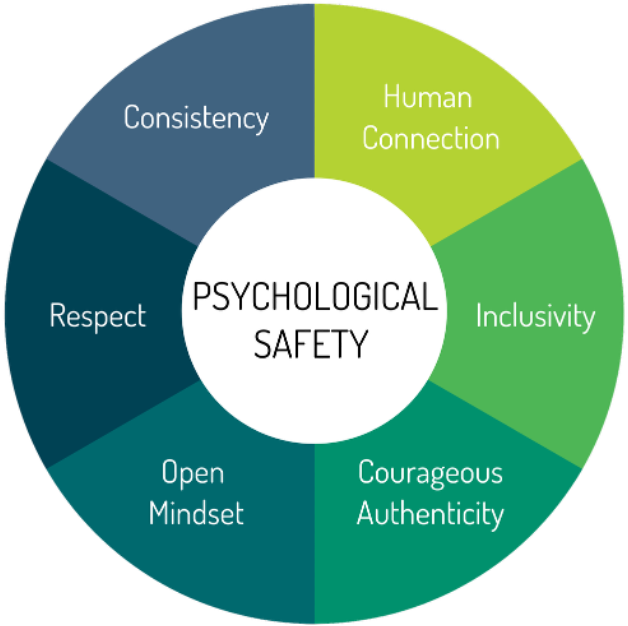
Steople Psychological Safety ModelTM
The next step is translating that insight into action. This is where the Whole Brain® Thinking and HBDI adds powerful leverage.
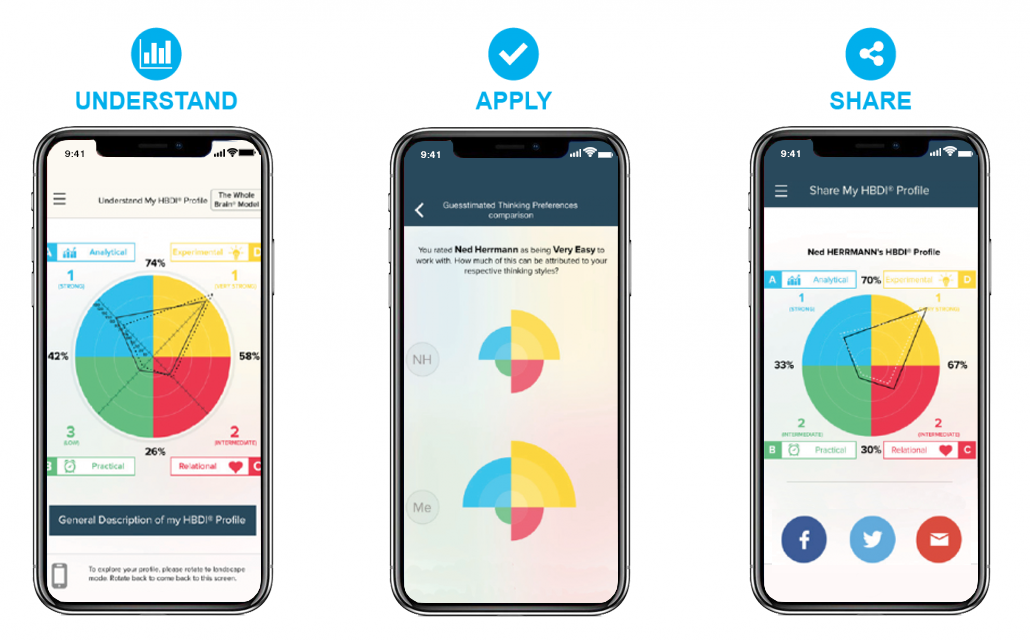
While the Steople Assessment clarifies where attention is needed, HBDI provides the practical, shared language for the how – how to intentionally redesign work and leadership behaviour.
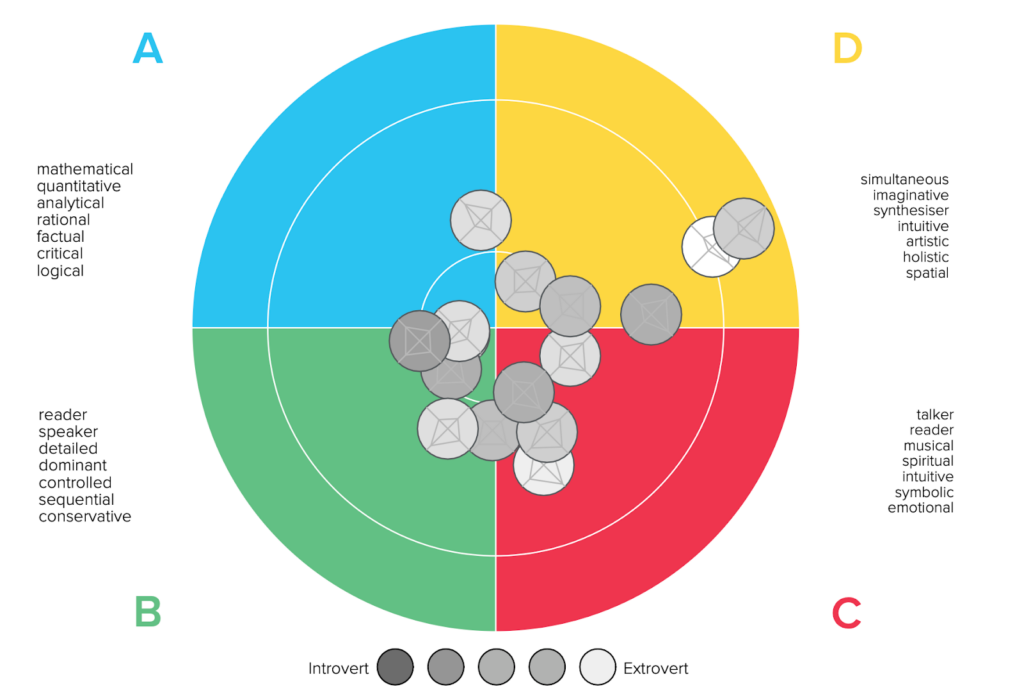
The combination of assessments helps teams and leaders understand why psychological safety breaks down, by illuminating thinking preferences and a current pulse check on psychological safety. Together they offer a depersonalised lens to examine how we communicate, include others, and respond to challenges under pressure.
Cognitive awareness is essential for making sustainable systemic change to shift the dial on organisational wide psychological safety:
- From Exclusion to Inclusion: HBDI provides a framework to ensure all thinking styles: analytical, structural, relational, and experimental, feel safely invited to contribute, directly strengthening Inclusivity and Open Mindset.
- From Intent to Experience: Move leaders beyond good intentions by showing them how their default thinking preference might be experienced by others, enabling them to flex their approach to create Respect and Consistency.
- From Friction to Focus: Provide a shared, non-judgmental language for teams to navigate conflict and express dissent, fostering Courageous Authenticity and deepening Human Connection.
Flexing thinking, based on HBDI insight, strengthens safety. Default, unconscious thinking narrows it. It answers the crucial next question:
“What needs to change in how we think and work together?”
From assessment to redesigning systems
Insight alone does not reduce psychosocial risk. Systems do.
By integrating Steople’s Psychological Safety Assessment™ with the HBDI, organisations are able to move beyond conversation and into practical redesign. This includes examining and reshaping:
- Decision-making processes
- Meeting structures and agendas
- Role clarity and expectations
- How challenge, dissent, and risk are expressed and received
- Leadership behaviours that are rewarded or reinforced
Psychological safety improves when expectations are explicit, contributions are depersonalised, and different ways of thinking are genuinely required, celebrated and appreciated, not just tolerated.
In this way, safety becomes embedded in how work happens, not dependent on individual resilience or a handful of skilled leaders.
A sustainable, system-level approach to psychological safety
Steople’s Psychological Safety Assessment works in conjunction with HBDI to strengthen psychological safety in a practical way. The assessment highlights where attention is needed, while HBDI offers a shared language for understanding how thinking preferences may be shaping behaviour. By integrating both, Steople supports organisations to redesign systems and practices that sustain psychological safety over time.
This approach treats psychological safety not as a one-off initiative, but as an organisational capability, measurable, adaptable, and embedded across leadership, teams, and culture.
From Insight to Implementation
If psychological safety is shaped by how work gets done, then sustainable change requires more than conversation. It requires practical tools that help leaders and teams redesign the systems, structures, and behaviours that influence psychosocial risk every day.
To support this shift, we’ve developed a structured toolkit that translates assessment insight into action. It provides a practical framework to help organisations identify risk patterns, flex leadership behaviour, and embed Whole Brain® Thinking into decision-making, team dynamics, and organisational systems.
Psychological safety improves when it is intentionally designed into how work happens. This toolkit helps you take that next step.
Download the toolkit to begin embedding psychological safety as a measurable, system-level capability across your organisation.