


Assessments are powerful tools for helping individuals and teams better understand their thinking preferences, personality traits, and strengths. With so many options available, it can be difficult to know which tool is best suited for your needs—whether you're seeking personal development, improving team dynamics, or driving organisational growth.
A question we’re often asked is how the Herrmann Brain Dominance Instrument® (HBDI®) compares to other assessments, or whether it should be used alongside them. While the HBDI® and the Whole Brain® Model offer valuable insights as standalone solutions, they also serve as a strong foundation for more comprehensive development strategies. Because thinking sits at the core of how we behave, communicate, and make decisions, the HBDI® is an ideal starting point for any assessment journey.
Rather than choosing one tool over another, we encourage a holistic approach—one that integrates multiple assessments to unlock deeper, more meaningful insights.
In this article, we’ll introduce the HBDI® assessment and explore its practical applications in the workplace. We’ll also look at how it complements other popular tools—such as DiSC, MBTI, and CliftonStrengths—and how combining these assessments can lead to a richer understanding of individuals and teams.
What is the HBDI® and the Whole Brain® Thinking model?
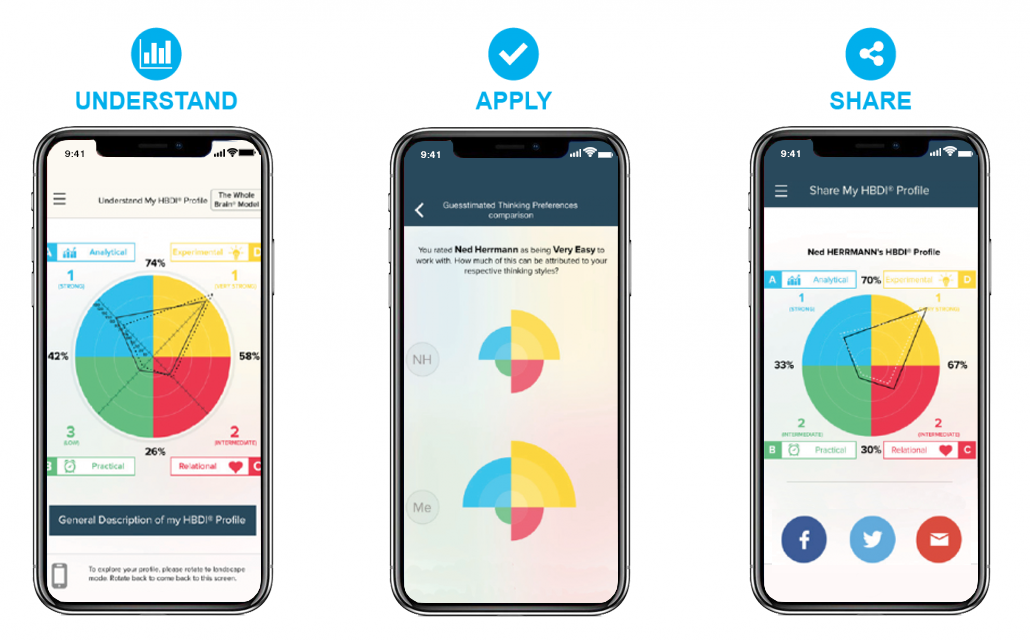
The HBDI assessment is developed on the Whole Brain® Thinking model. Together, they provide a complete framework for understanding and utilising varied cognitive preferences. This supports a holistic approach to maximising human thinking potential.
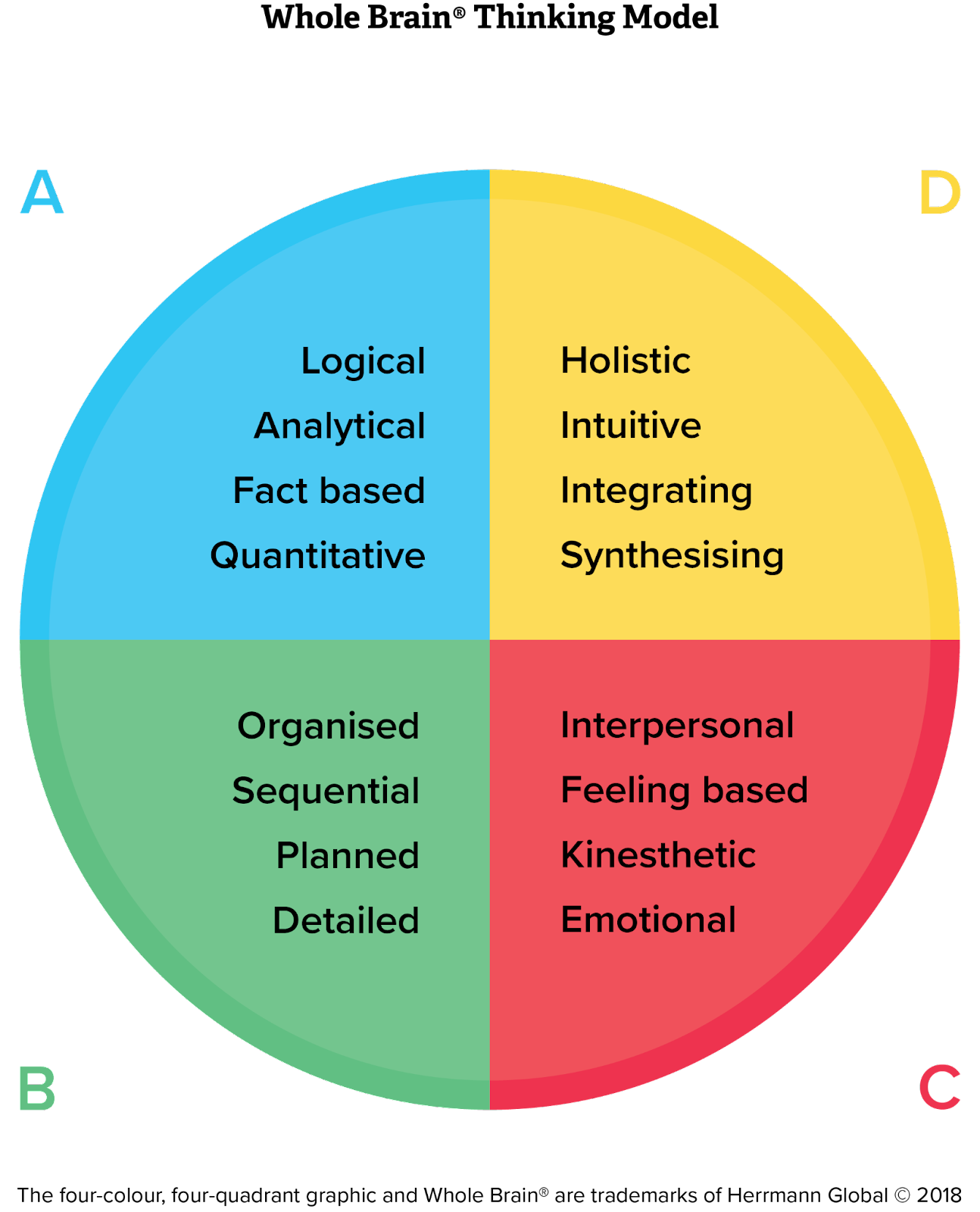
The Whole Brain® Thinking model is divided into four quadrants, namely:
- The A Quadrant – Analytical Thinking: analysis of facts, numbers processing, logical thinking
- The B Quadrant – Practical Thinking: organising facts, detailed review, planning approach
- The C Quadrant – Relational Thinking: interpersonal, expressive, intuitive
- The D Quadrant – Experimental Thinking: big-picture thinking, imaginative, conceptual thinking
How does the HBDI® work?
To transform and enhance your business using Whole Brain® Thinking and the HBDI®, you have two different options at your disposal: HBDI Workshops and HBDI Certification.
HBDI® Workshops
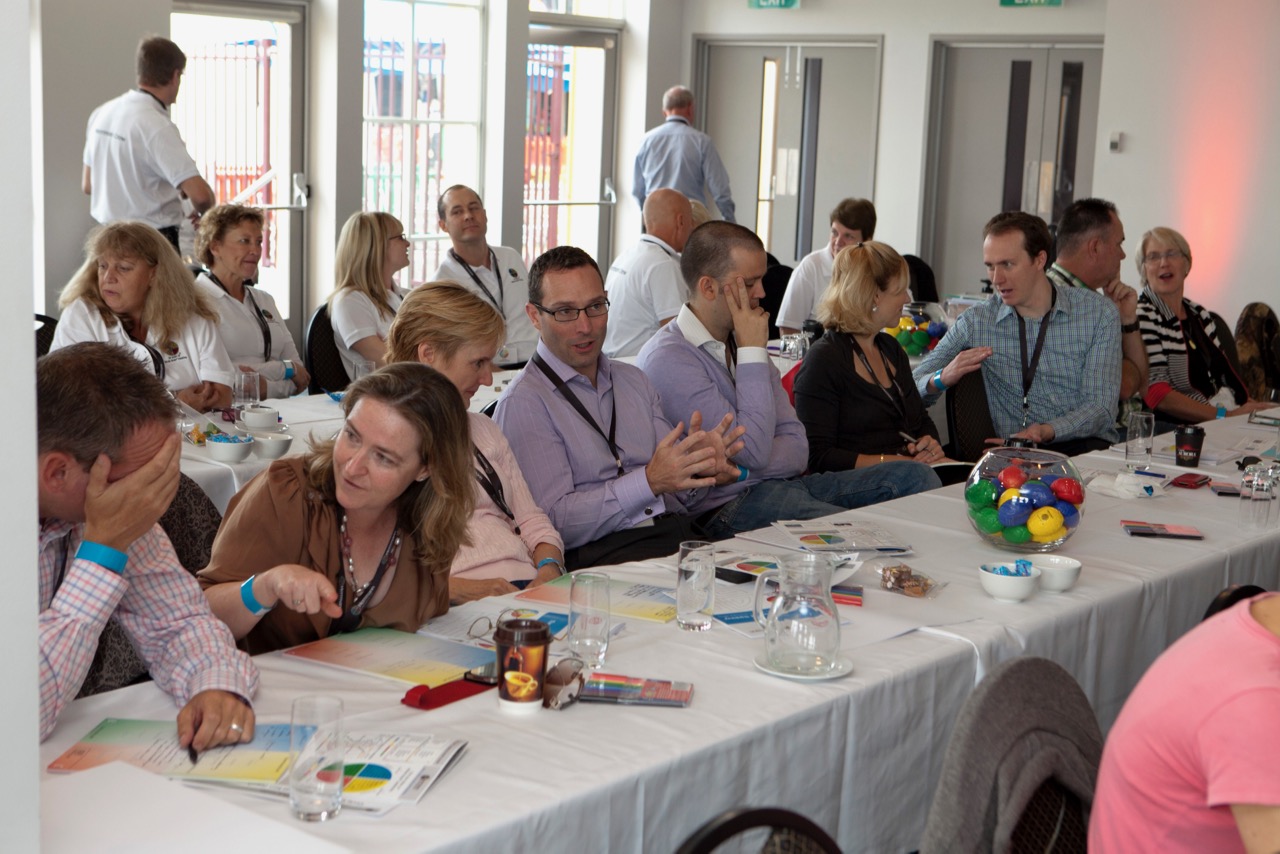
For immediate impact, you can schedule a workshop tailored to your group or team, facilitated by an industry expert from our network of Certified Practitioners.
These sessions, adaptable for online or in-person settings, are meticulously designed to address your organisation’s specific challenges and opportunities, ranging from 90-minute sessions to full-day engagements.
HBDI® Certification
Take your commitment a step further by opting for HBDI Certification. Led by highly trained Master Practitioners, this globally recognised program equips you or your team members with the skills to seamlessly integrate Whole Brain® Thinking and the HBDI into your professional world. Explore our comprehensive online certification program to embark on this transformative journey and become part of our network of thinkers across the world.
Our Learning Modules, led by practitioners, offer focused and practical training experiences for individuals and teams. Whether you’re looking to boost personal development, enhance team dynamics, or elevate leadership capabilities, our modules cater to your specific needs.
Certification modules
- Whole Brain® Thinking for Personal Development: Tailored for individual growth, these modules cover topics such as Understanding my HBDI and Debriefing 1-on-1, designed for both personal reflection and group learning.
- Whole Brain® Thinking for Teams: Elevate team performance with modules like Maximising Team Performance and Understanding My Team.
- Whole Brain® Thinking for Leadership Development: If you’re focused on developing strong leadership and powerful partnerships, these modules provide invaluable insights and strategies to drive leadership capacity and forge impactful collaborations.
Why should you consider doing the HBDI® assessment?
The HBDI® isn’t just another personality test—it’s a powerful tool for unlocking deeper self-awareness and enhancing how you work with others. Whether you're aiming to boost individual performance or strengthen team dynamics, understanding thinking preferences can transform communication, collaboration, and problem-solving.
Here's how the HBDI® can make a meaningful difference:
Increased self-awareness
The HBDI® assessment provides deep insights into your thinking patterns, helping you understand your strengths and areas for improvement. For instance, if you discover a preference for analytical thinking, you can leverage this strength in data-driven tasks. Conversely, if relational thinking is your forte, you’ll know how to excel in building emotional connections with others.
Enhanced communication and collaboration
Understanding thinking preferences enables smoother communication. If you know a colleague prefers analytical thinking, you can present data-driven arguments, while with a relational thinker, you’ll emphasise emotional aspects. This diverse communication fosters teamwork and collaboration, as everyone feels heard and valued.
Improved problem-solving and decision-making
The HBDI® aids in addressing challenges by leveraging diverse thinking preferences. It’s like having a panel of experts with varied backgrounds tackling a complex issue. This diversity leads to more well-rounded and informed decisions. Much like assembling a group that includes artists, engineers, scientists, and philosophers, this rich blend of thinking styles fosters greater innovation and enhances problem-solving effectiveness.
Improved individual and team development
The HBDI® acts as a roadmap for personal growth and team development. Individuals can focus on improving their underdeveloped thinking preferences, while teams can optimise performance by diversifying thinking styles.
How can you use the HBDI® framework at work?
The HBDI assessment is just the beginning; its true value lies in the Whole Brain® Thinking framework it comes with. This framework creates a common language within your workplace, connecting individuals, teams, and processes. By embedding Whole Brain® Thinking into your organisation, you can enhance communication, collaboration, and problem-solving.
Comparing HBDI® with other assessment tools
With so many assessment tools available, it’s natural to wonder how they stack up, and whether they can work together. In this section, we’ll compare the HBDI® with other popular assessments to explore where they align, where they differ, and how they can be used together for deeper impact.
What are they measuring?
When choosing an assessment tool, it’s important to understand what each one is actually measuring. While many assessments may seem similar on the surface, they often serve very different purposes, ranging from uncovering personality traits to identifying behavioural styles, competencies or emotional intelligence.
| Assessments/Tools | What is it measuring? |
| HBDI® and Whole Brain® Thinking | HBDI measures an individual’s thinking preferences and provides a scientifically proven method to think through to build a common language. |
| Predictive Index, Korn-Ferry 4D | Talent acquisition |
| Strong Holland, MAPP | Potential occupation |
| CliftonStrengths | Strength of behaviour |
| Hogan, Highlander | Perception vs. others’ regarding behaviour |
| DiSC | Behaviour in a specific context |
| EQ, EI 2.0 | Emotional Intelligence |
| Birkman | Personality |
| MBTI, Insights, Big 5 | Personality style |
| Predictive Index | Behavioural style |
HBDI® and DiSC
Many people are already familiar with DiSC from its use in short-term communication or team-building activities that focus on behavioural preferences.
But what if you’re working on a more strategic initiative, the sort of critical applications that are the “sweet spot” for Whole Brain® Thinking and the HBDI®? Can the HBDI® and DiSC coexist?
Absolutely. Participants who’ve already taken DiSC are very quick to pick up the HBDI® and begin making their own comparisons, finding value in the distinctions. Participants can connect the dots between their thinking and behaviour, to understand what can be done for greater impact.
| HBDI® | DiSC® |
| Focuses on thinking preferences/cognition | Examines behavioural traits/ observable behaviour patterns |
| Identifies four primary quadrants representing analytical, practical, experimental, and relational thinking. | Classifies individuals into four profiles based on communication style and reactions to stressors—Dominance, Influence, Steadiness, and Conscientiousness. |
| Serves as a compass guiding individuals and teams through cognitive diversity. | Offers insights into how individuals tend to behave in specific contexts. |
| Helps you understand how you and your team think | Provides insights into how you act and interact with others |
Discover more tips about how to use the HBDI and DiSC.
HBDI® and CliftonStrengths StrengthsFinder®
We often see parallels in the results of the HBDI® and StrengthsFinder® assessments. This is because people tend to build competencies in the areas they prefer to operate in, so their thinking preferences and their strengths align.
While the StrengthsFinder® helps people to identify their key competencies, we encourage people to use both tools to get a more holistic look at a team’s preferences, strengths and any “blind spots” that they may not notice using the StrengthsFinder® alone.
| HBDI® | StrengthsFinder® |
| Identifies strengths within four thinking quadrants—Logical, Organised, Relational, and Innovative. | Explores natural strengths and talents across 34 themes. |
| Equips individuals and teams with a deeper understanding of how they process information and make decisions. | Helps individuals uncover their unique gifts and areas for development, fostering personal growth and leveraging strengths in various aspects of life. |
| Emphasises thinking preferences and how they contribute to problem-solving and decision-making | Emphasises innate talents that can be applied to various domains. |
Discover more similarities and differences between CliftonStrengths and the HBDI.
HBDI® and Myers Briggs Type Indicator® (MBTI)
While the two employee assessments measure different things (thinking vs. personality), many companies choose to pair them because thinking and personality are so connected.
The beauty of these assessments is that one informs the other, and people can easily see the similarities in how they think and how they behave.
If you’ve already rolled out the MBTI®, you can introduce the HBDI to explore what’s behind those behaviours — the person’s thinking preferences. They work well together when that relationship between thinking and behaviour is clearly explained.
| HBDI® | MBTI® |
| Measures thinking preferences, categorising individuals into four thinking quadrants—Analytical, Practical, Experimental, and Relational. | Categorises individuals into 16 personality types based on preferences in four areas—Extraversion/Introversion, Sensing/Intuition, Thinking/Feeling, and Judging/Perceiving |
| Focuses on how people process information and make decisions. | Centres on understanding individual personalities and how they interact with others. |
| Zooms in on cognitive preferences and thinking styles | Delves into broader personality traits, including how individuals perceive and interact with the world. |
Read here for a more in-depth comparison on HBDI vs MBTI.
HBDI® and Insights Discovery
If you’ve used Insights Discovery before, you’ll be familiar with its colour-coded approach to understanding personality preferences based on Jungian psychology. It’s often popular for helping individuals improve self-awareness and interpersonal dynamics.
But what if you want to go a step further—beyond personality—and tap into how people actually approach thinking, problem-solving, and decision-making in different contexts? That’s where the HBDI® and Whole Brain® Thinking come in.
Rather than replacing one tool with the other, these models can work in tandem. Many participants find that the HBDI® adds depth to what they’ve learned through Insights, helping them translate personality insights into practical thinking strategies for real workplace challenges.
| HBDI® | Insights Discovery |
| Emphasises thinking preferences, revealing individual and team strengths within the Logical, Organised, Relational, and Innovative thinking quadrants. | Uses a four-colour model to represent behavioural patterns and adapt communication styles. |
| Focuses on cognitive diversity and thinking styles. | Centres on behavioural traits and communication styles. |
HBDI® and Predictive Index (PI)
The Predictive Index is a popular tool for understanding behavioural drives and aligning talent with business strategy, especially during recruitment or role fit evaluations.
However, when it comes to developing thinking agility and building team collaboration, the HBDI® offers a different kind of value. It focuses not on what motivates someone’s behaviour, but how they prefer to think and solve problems.
Used together, these tools can provide a comprehensive view of an individual’s cognitive and behavioural makeup. Many organisations find that Predictive Index helps with selection, while HBDI® helps with development, enabling teams to maximise performance by understanding both how people behave and how they think.
| HBDI® | PI |
| Delves into thinking preferences by analysing four thinking quadrants, providing insights into cognitive and work-related tendencies. | Assesses workplace behaviours and driving forces, helping organisations match individuals with suitable positions based on their behavioural traits. |
| Offers a comprehensive understanding of thinking preferences and provides tools for practical application | Provides insights into workplace behaviour and motivation for better role assignments. |
What sets the HBDI® apart? The Whole Brain® Thinking language
The significance of a common language cannot be overstated, and the Whole Brain® Thinking framework provides precisely that. By creating a reusable baseline language, it amplifies efficiency and mutual understanding among teams and departments, fostering seamless collaboration.
What sets the HBDI® apart from other assessments is its unparalleled comprehensiveness; it doesn’t merely scratch the surface but offers a deep and practical language and framework for application. The beauty of the Whole Brain® Thinking framework lies in its versatility, as it becomes a valuable companion not only in your professional endeavours but also in your personal growth journey, ensuring its enduring impact across various facets of life.
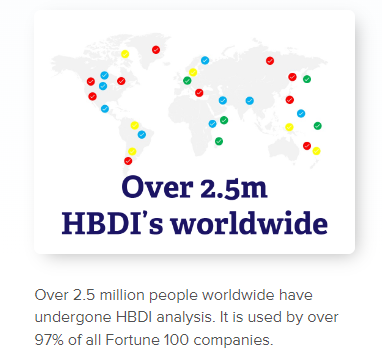
With over 2.5 million individuals having embraced the HBDI® assessment, it has become a shared linguistic key that you can carry with you throughout your professional journey and personal life. This invaluable tool empowers you not only to comprehend others better but also to facilitate their understanding of you, fostering more meaningful interactions wherever you go.
In a landscape filled with various assessments and tests, the HBDI® distinguishes itself as a truly exceptional tool. Its primary focus on thinking preferences, coupled with the transformative Whole Brain® Thinking framework, places it in a league of its own. Beyond being a mere assessment, it serves as a key that unlocks doors to enhanced understanding, seamless collaboration, and innovative thinking.
Next steps
To learn more about the key differentiators between the HBDI assessment and other assessments, download our free whitepaper on HBDI® and Other Assessments. Or, if you want to learn more about how Whole Brain® Thinking and the HBDI® can help you and your organisation, get in touch and we’ll help you find the right solution.